Tuesday, February 2, 2010

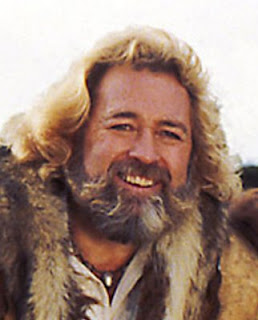
Grizzly Adams DID have a beard!

After seeing the Grizzly Adams clip in class today it reminded me of when I first heard the name in a classic film, Happy Gilmore. I figured I'd post it to hopefully share some laughs.


Indeed Grizzly Adams DID have a beard!

Monday, February 1, 2010

Extra Credit


As I mentioned on the first day of class, I have decided that I will offer everyone some extra credit opportunities this semester.

Like I have done the past couple of years in my classes- if there is interest- there will be an optional field trip to Effigy Mounds National Monument offered. http://www.nps.gov/efmo/index.htm If you go on this trip (which will take place when it gets warmer in March or April), I will give you 3 points on top of your final overall grade in the class.

Also, on Tuesday I will mention the opportunity to watch some films outside of class for extra credit. If you watch one of the films I approve and write a 2-3 page response, you will get one extra credit point. Like with the trip to Effigy, this will be offered only if there is class interest.

Grizzly Adams

Skin Griz scene from Jeremiah Johnson


Grand Tetons Grizzly Bear

Jeremiah Johnson and Bent's Fort


Hi Folks.

Make sure you continue with the assigned reading in Bent's Fort. We will split class time on Tuesday between discussing the book and watching the next part of Jeremiah Johnson.

Take care.

My thoughts on Chapter 8

I found Chapter 8 really interesting and had to share a few thoughts about it. The first thing that really interested me was how the military was being used to travel west. The dragoons and other military protection seemed, to me, a bit extreme? I suppose the government wanted their goods to be as safe as possible. It made me wonder when the idea of a police force was first introduced. (I'm sure a police force, like it is today, wasn't introduced for a long, long time). I also found myself getting upset at the way the American government was basically forcing the Indian tribes to get along with each other, almost as if they were groups of kids fighting on a playground. Treaties were being forced upon them, and bribes were being made. I noticed that any time the Americans wanted the Indians to behave they gave them presents (again, like children). Obviously this isn't very fair at all, forcing the Indians out of their native lands and farther west. Many times alcohol was used as well when getting the Indians to "do what the government says." I was surprised at how big of an impact alcohol really had! Eventually William Bent did see how bad this really was and limited the amount allowed to the Indians.


My only other thought was that I loved how Bents' Fort had a pet grizzly bear :)

Thursday, January 28, 2010

Travelling to the West

I found some more background information on travelling to the West for Americans and I wanted to share it with the class. This website (at the end) clarified a few things from the readings such as what a Captain did on the journey to the West. The Captain was basically in charge of the whole journey and he usually made sure everyone was ready to go and decided when it was best to rest or camp out for the night. Another topic was about which wagons were used to go West. The best wagon to travel to the West was the Prairie Schooner. It required less animals to pull which made the cost overall less, but it could only contain 1600 pounds. It also gave some interesting facts such as the cost of a mule, which was $90 and an oxen was $60 in the 1840s. These were just some of the topics given on the website and the article was pretty short.

Website: http://americanhistory.suite101.com/article.cfm/the_wagon_train

Reference:
Dollman, Darla S. "The Wagon Train: Emigrant Travel in the American West." American History. 12 Mar. 2009. Web. 28 Jan. 2010. .

Inglorious Basterds

Just as a sidenote for those of who may have seen Quentin Tarantino's lastest film, it is interesting that the character Aldo Raine (played by Brad Pitt) claims to be the descendent of the "mountain man Jim Bridger" and part Apache- and thus this is the reason he collects the scalps of his Nazi kills. Hm.

Manuel Lisa


Manuel Lisa, "I find that I have travelled a great distance while others are deciding whether to start their journey today or tomorrow."


Manuel Lisa appears in our Bent's Fort book a lot in the early chapters. Here is a little background information on Lisa.


  • (September 8, 1772 – August 12, 1820)

  • fur trader and explorer who was among the founders of the St. Louis Missouri Fur Company, later known as the Missouri Fur Company.

  • Lisa was highly influential among American Indian tribes. Due to his personal standing with them, during the War of 1812, he helped neutralize pro-British tribes in the Minnesota region by inspiring the powerful Teton Sioux to attack them.

  • 1796 Lisa married Polly Charles Chew, a young widow

  • Lisa moved his trading post operations further east and south. He built his first Fort Lisa (1809-1812), also known as Fort Manuel Lisa Trading Post, near a Gros Ventres village between the mouth of the Little Missouri and the Big Knife rivers, in what is now North Dakota.

  • He became the master of the upper Missouri by 1820, developing strong relationships with the Omaha, Ponca, Yankton Sioux and Teton Sioux, Mandan and Arikara peoples.

  • After several founding members of the Missouri Fur Company left, Manuel Lisa headed the company. After 1814 he renamed it Manuel Lisa and Company

  • Before dying in 1820, Lisa had remarried twice (three wives).

  • He was buried there in Bellefontaine Cemetery. After Lisa's death, Joshua Pilcher took over the presidency of the fur company.

Tuesday, January 26, 2010

Bent's Fort Discussion Questions, Pages 1-75/


Picture: 1803 Map of the United States

In the Introduction, "A Place Called Purgatory," what does Lavender say is the goal of this book? (Page 12). Why does he introduce the topic of the book in this way?

How did Lewis and Clark effect the ambitions of tradesmen in the United States?

What kind of town is St. Louis in the late eighteenth and early nineteenth century? What would it have been like to grow up there? What effect do you think did it have on the Bents?

What rivers, or "bloody waters" as Lavender calls them, play the most prominent role in the West at this time?

Describe the amount of territory that fur traders are covering at this historical moment?

What is the relationship between the plains and the mountains for the fur traders?

What is the advantage of working for a fur trade company vs. going-it-alone?

Why do certain fur traders begin to focus more on the Southwest than the Green River Valley and areas in Wyoming, Utah, and Montana?

What sort of place is Taos when American fur traders first start going there? (page 64) What major historic event enables Americans to finally be able to trade in the American Southwest without constant fear of arrest?